





Secure your energy supply, optimise your aviation fuel supply chains and embrace sustainable solutions for the future of aviation. We support you with bespoke fuel solutions, reliable infrastructure and comprehensive advice – from procurement through to implementation.
ENERGY to fly
Reliable Aviation Fuel Supply for Airports and Airlines
MB Energy provides reliable aviation fuel supply for airports, airlines and aviation operators across the UK. Through a combination of fuel trading expertise, strategic partnerships and strong operational capabilities, we help ensure consistent fuel availability for the aviation sector.
Our services cover the supply of conventional jet fuel as well as Sustainable Aviation Fuel (SAF), supporting the aviation industry as it progresses towards lower-carbon solutions.
Working closely with airport operators, refuelling partners and airline customers, MB Energy delivers a dependable jet fuel supply service designed to support safe, efficient and uninterrupted flight operations.
Energy requirements in aviation
Security of supply in global supply chains
The aviation industry relies on an uninterrupted supply. International aviation fuel supply chains must be designed in such a way that even large airports can be reliably supplied at all times. Disruptions in the supply chain can have a direct impact on flight operations and must therefore be safeguarded by robust structures.
Effective cost control in flight operations
Fuel costs are among the biggest cost factors in the aviation industry. Companies therefore need strategies to optimise procurement, energy trading and long-term supply contracts in order to remain economically competitive.
Sustainability and regulatory requirements
Reducing CO₂ emissions is a key challenge facing the industry. The use of sustainable aviation fuel (SAF), as well as compliance with international climate targets and reporting requirements, is becoming increasingly important and is influencing the strategic decisions of airlines and airports.
Operational safety and quality standards
Aviation fuels must comply with strict international standards. Safe, standardised refuelling and continuous quality controls are essential to minimise risks and ensure safe flight operations.
Scalability to meet growing demands
With rising passenger numbers and growing freight volumes, energy supply and logistics must be flexibly scalable. Companies need solutions that can be adapted to changing demand and new market conditions.
Our energy products for the aviation industry
FAQ
What is Jet A-1 fuel?
Jet A-1 is the most commonly used fuel for jet aircraft. It is characterised by high energy density, good low-temperature properties and a high level of operational reliability.
What is Sustainable Aviation Fuel (SAF)?
SAF is a sustainable aviation fuel made from renewable raw materials or waste materials. It can significantly reduce CO₂ emissions across its entire life cycle and supports the decarbonisation of aviation.
How does Aircraft Refuelling work at the Airport?
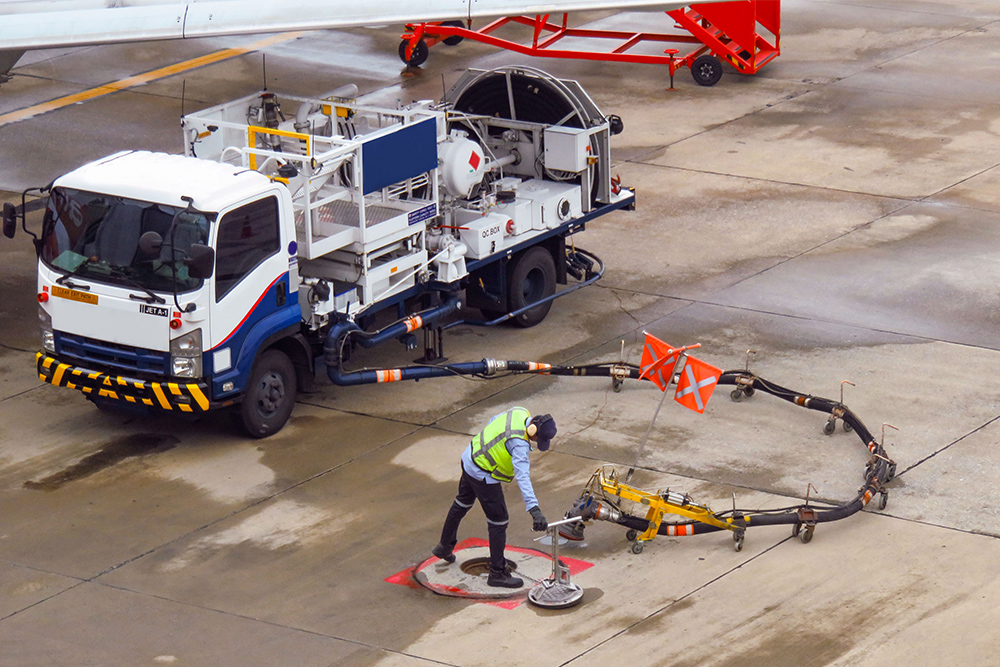
Refuelling is carried out either by tanker trucks or via underground pipeline systems. In the so-called ‘into-plane’ procedure, the fuel is pumped directly into the aircraft, in accordance with strict safety and quality controls.
What are e-fuels for aviation?
E-fuels are synthetic fuels produced using renewable energy. They are created by combining hydrogen and CO₂ and are regarded as a promising option for climate-neutral aviation.
How is aviation fuel transported to airports?
Transport takes place via pipelines, tank farms, terminals and tankers. Major airports usually have their own infrastructure to ensure a continuous supply.